Food Videos Are Dominating Social Media
Introduction
Scroll through Instagram, YouTube Shorts, or TikTok, and you’ll quickly notice one thing—food videos are everywhere. From slow-motion cheese pulls and sizzling pans to beautifully plated desserts and quick recipe tutorials, culinary content has become one of the most engaging formats on social media.
Food has a universal appeal. Whether someone enjoys cooking, loves trying new restaurants, or simply appreciates visually satisfying content, food videos capture attention within seconds. As short-form video continues to dominate digital platforms, chefs, restaurants, food brands, influencers, and content creators are using high-quality culinary videos to build loyal audiences and increase brand visibility.
But creating food content that stands out takes more than just a smartphone. Professional production, creative styling, and the right environment all play a major role in making food look irresistible.
Why Food Content Performs So Well
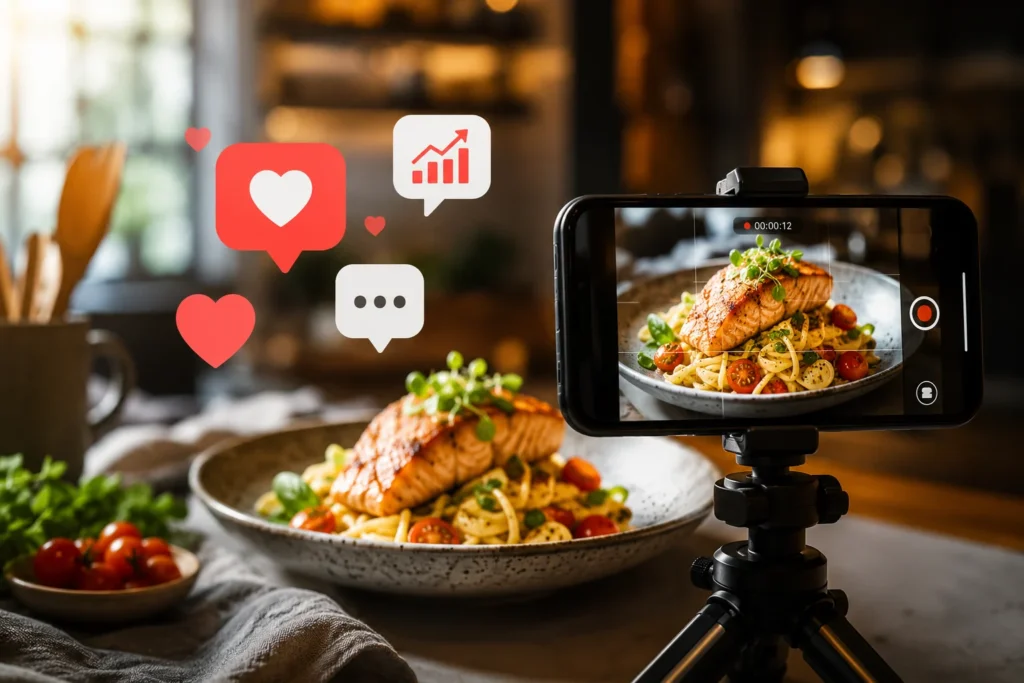
Food Content Studio consistently receives high engagement because it connects with people on multiple levels. It entertains, educates, and inspires all at once.
Popular food content formats include:
- Quick recipe videos
- Restaurant showcases
- Cooking tutorials
- Behind-the-scenes kitchen moments
- Product demonstrations
- Chef collaborations
- Taste-test and review videos
These videos encourage viewers to watch until the end, save recipes for later, share them with friends, and even make purchasing decisions. This combination of entertainment and practical value makes culinary content one of the strongest performers across social media.
The Psychology Behind Visual Food Appeal
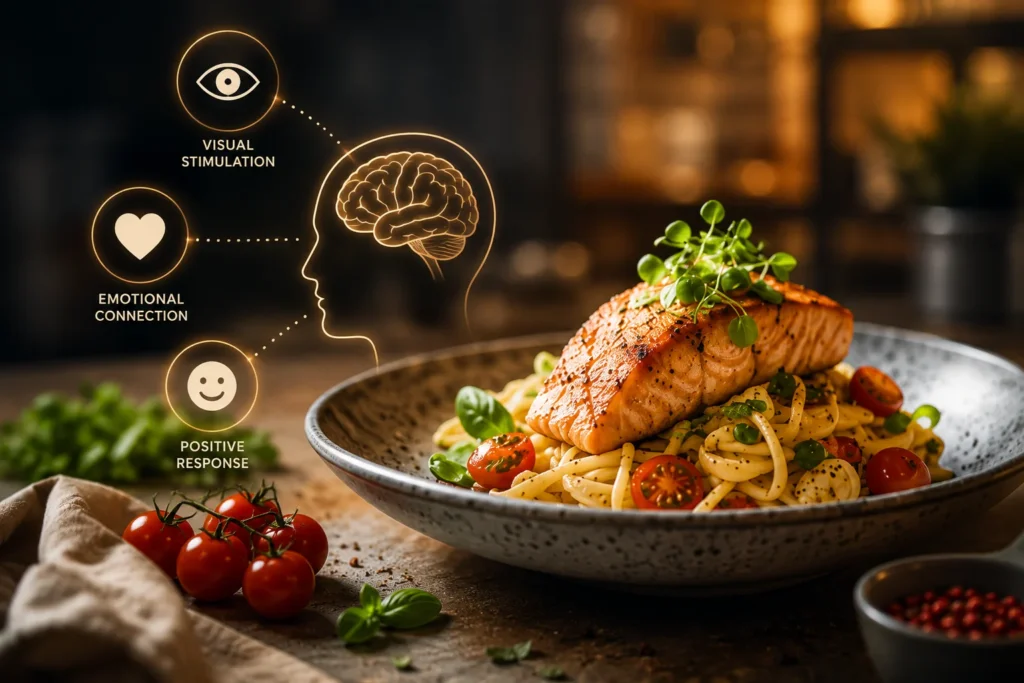
People naturally respond to visually appealing food. Bright colors, fresh ingredients, attractive plating, and satisfying cooking processes stimulate curiosity and create an emotional response.
When viewers see freshly baked bread, perfectly grilled vegetables, or chocolate slowly melting, they often imagine the taste and aroma. This sensory connection keeps audiences engaged for longer and increases the likelihood that they’ll interact with the content.
That’s why successful food creators focus not only on recipes but also on presentation.
Role of Motion, Texture & Sound in Food Videos
Food videos become even more captivating when movement and sound are used effectively.
Simple moments like:
- Sauce being poured
- Coffee brewing
- Steam rising from a hot dish
- Crispy bites
- Knife slicing through fresh ingredients
- Sizzling sounds from a pan
can instantly make viewers stop scrolling.
These details create a more immersive experience and make the content feel authentic. High-quality cameras, proper frame rates, and clear audio help capture these moments in a way that ordinary recordings often cannot.
Importance of Lighting & Styling
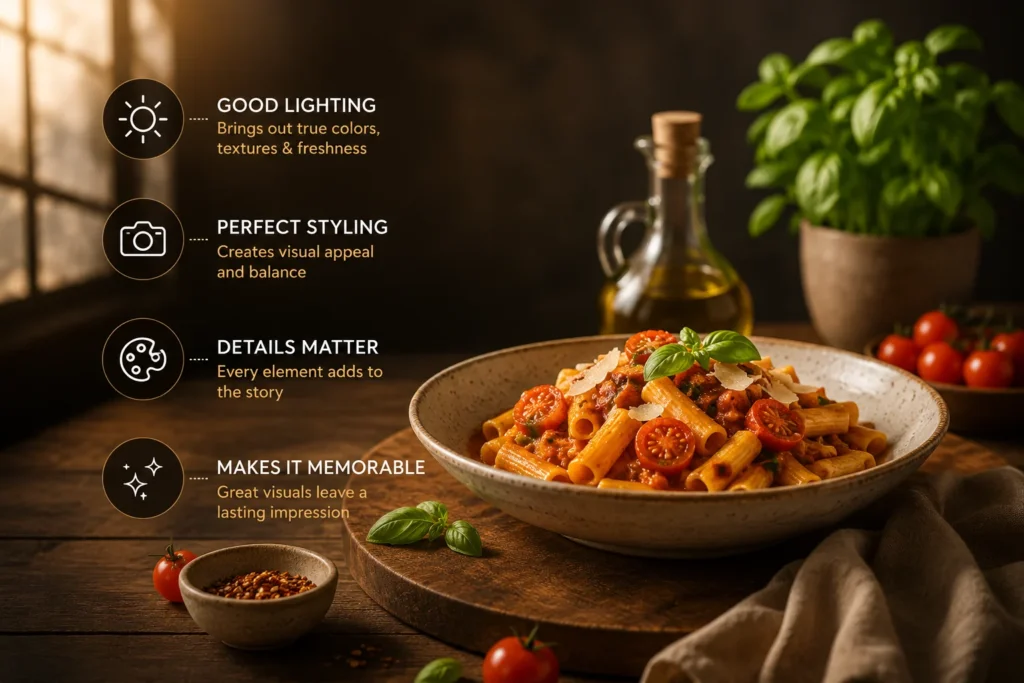
Lighting is one of the biggest factors in food photography and videography.
Poor lighting can make even delicious food appear dull and unappetizing, while professional lighting enhances:
- Natural colors
- Texture
- Freshness
- Depth
- Visual appeal
Food styling is equally important. Every ingredient, garnish, plate, and background element contributes to the final look.
Professional styling ensures that each frame tells a story while maintaining consistency across all brand content.
Why a Professional Kitchen Studio Makes a Difference
Many creators start by filming in home kitchens, but as content quality expectations increase, dedicated kitchen studios provide significant advantages.
A professional kitchen studio offers:
- Controlled lighting setups
- Modern kitchen interiors
- Premium cookware and props
- Spacious shooting areas
- Multiple camera angles
- Clean, distraction-free backgrounds
This environment allows creators and brands to focus on storytelling instead of worrying about space limitations or inconsistent lighting.
For businesses launching food products or creating recipe campaigns, a professional studio also ensures consistent quality across every piece of content.
How Brands Use Food Content to Drive Engagement & Sales
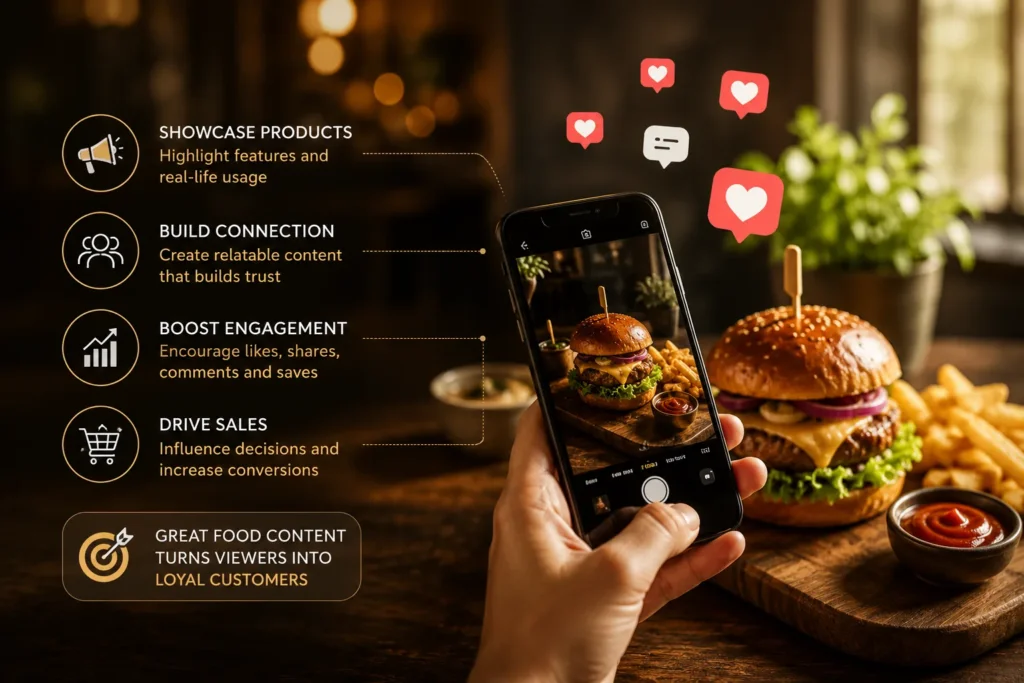
Food Content Studio has become a valuable marketing tool for restaurants, cafés, packaged food companies, kitchen appliance brands, grocery businesses, and delivery services.
Brands use culinary videos to:
- Showcase products in action
- Introduce new menu items
- Demonstrate recipes
- Build customer trust
- Increase social media engagement
- Drive website traffic
- Support advertising campaigns
Instead of relying solely on product images, brands now create engaging visual stories that help customers connect with their products before making a purchase.
Common Mistakes in Food Content Creation
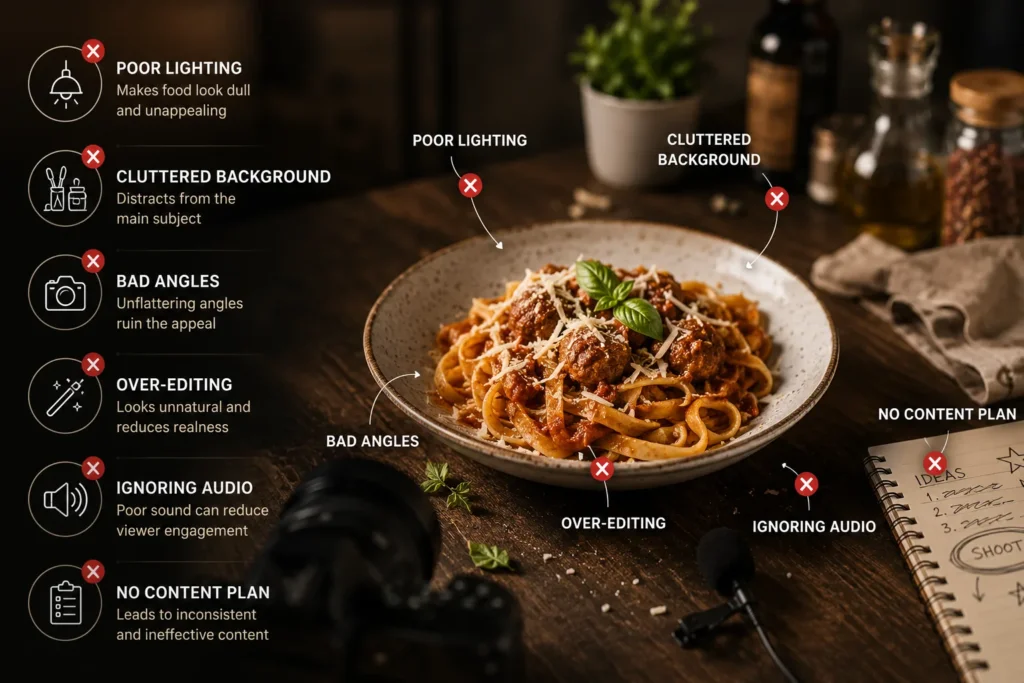
While food content is highly effective, several common mistakes can reduce its impact.
Some of the most frequent issues include:
- Poor lighting
- Cluttered backgrounds
- Weak camera angles
- Over-editing
- Inconsistent branding
- Ignoring audio quality
- Rushing the plating process
- Filming without a content plan
Even simple improvements in preparation and production can significantly enhance the final result.
Emerging Culinary Content Trends
Food content continues to evolve alongside changing audience preferences.
Some of the biggest trends shaping culinary content include:
- Short-form recipe videos under one minute
- Behind-the-scenes kitchen storytelling
- Chef personality-driven content
- Farm-to-table narratives
- Healthy and sustainable cooking
- ASMR food experiences
- Interactive cooking challenges
- AI-assisted editing and content planning
- Multi-platform content created from a single shoot
Brands that adapt to these trends are more likely to stay relevant and maintain strong audience engagement.
Conclusion
Food content has become one of the most powerful forms of digital storytelling. Its ability to capture attention, trigger emotions, and encourage engagement makes it an essential part of modern marketing strategies for restaurants, food brands, and creators alike.
As competition continues to grow, production quality becomes a key differentiator. Professional lighting, thoughtful styling, high-quality visuals, and a well-equipped kitchen studio can transform simple recipes into compelling content that audiences remember and share.
For brands looking to strengthen their online presence, investing in professionally produced culinary content isn’t just about creating beautiful videos—it’s about building trust, increasing engagement, and turning viewers into loyal customers.